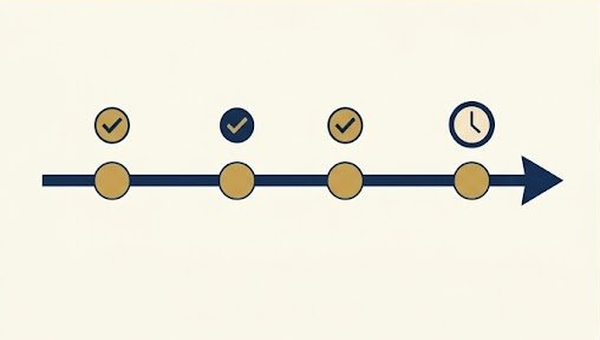
The Honest Answer: It Depends on Three Things
Most state unclaimed property offices publish a single processing time — something like "6–8 weeks" — but that number is rarely the full story. Your actual wait time is determined by three factors that most state websites don't explain clearly.
1. Property type. Cash claims (a dormant bank account balance that's been converted to cash by the state) move fastest. Securities claims — stocks, mutual funds, and dividends — take significantly longer because the state has to either hold the securities in their original form or sell them and hold the proceeds, and either way the paperwork chain is more complex. Safe deposit box contents require in-person verification at many states and can take months.
2. Documentation completeness. This is the most common source of delays. If your submitted documents have even a minor mismatch — your name appears as "Robert" on your ID but "Bob" on the original account records, for example — your claim will be flagged for manual review. Manual review queues at most state offices run 4–8 weeks on top of normal processing time.
3. Time of year. Unclaimed property offices across every state report surges in claim volume between January and April (tax season, when people are reviewing finances) and again in September and October (fiscal year end for many states). If you file during these windows, add 2–4 weeks to any published estimate.
Many filers assume their claim is "processing" when it hasn't been logged yet. Before checking status, verify you received a confirmation number or email from the state. If you mailed a paper claim and didn't get confirmation, call to confirm receipt before assuming a delay.
State-by-State Processing Time Table
The following times reflect standard cash claim processing under normal volume conditions. Add 2–4 weeks during tax season (Jan–Apr). Securities claims typically take 1.5–2x longer than the times shown.
| State | Cash Claims | Securities Claims | Status Check Available | Notes |
|---|---|---|---|---|
| Alabama | 8–10 weeks | 12–16 weeks | Yes (online) | Paper claims take 2–3 weeks longer |
| Alaska | 6–8 weeks | 10–14 weeks | Phone only | Small office; June–Aug slower |
| Arizona | 4–6 weeks | 8–12 weeks | Yes (online) | One of the faster processors; online claims prioritized |
| Arkansas | 8–12 weeks | 14–20 weeks | Phone only | No online status portal as of 2025 |
| California | 6–9 weeks | 12–18 weeks | Yes (online) | Highest volume state; Jan–Apr adds 4–6 weeks |
| Colorado | 4–6 weeks | 8–10 weeks | Yes (online) | Online portal updated weekly |
| Connecticut | 6–8 weeks | 10–14 weeks | Yes (online) | — |
| Delaware | 8–12 weeks | 14–18 weeks | Phone only | High business entity claim volume |
| Florida | 5–8 weeks | 10–14 weeks | Yes (online) | Snowbird season (Dec–Mar) adds delays |
| Georgia | 6–10 weeks | 12–16 weeks | Yes (online) | — |
| Hawaii | 10–14 weeks | 16–20 weeks | Phone only | Smallest dedicated staff; plan accordingly |
| Idaho | 6–8 weeks | 10–14 weeks | Yes (online) | — |
| Illinois | 6–8 weeks | 10–16 weeks | Yes (online) | Chicago metro claims routed separately |
| Indiana | 6–10 weeks | 12–16 weeks | Yes (online) | — |
| Iowa | 4–6 weeks | 8–12 weeks | Yes (online) | Consistently one of the faster states |
| Kansas | 6–8 weeks | 10–14 weeks | Yes (online) | — |
| Kentucky | 8–10 weeks | 12–18 weeks | Phone only | Paper-heavy process as of 2025 |
| Louisiana | 8–12 weeks | 14–20 weeks | Yes (online) | Hurricane season disruptions possible |
| Maine | 6–8 weeks | 10–14 weeks | Phone only | — |
| Maryland | 6–10 weeks | 12–16 weeks | Yes (online) | — |
| Massachusetts | 5–8 weeks | 10–14 weeks | Yes (online) | Online portal is well-maintained |
| Michigan | 6–8 weeks | 10–14 weeks | Yes (online) | — |
| Minnesota | 4–6 weeks | 8–12 weeks | Yes (online) | Efficient online process |
| Mississippi | 10–14 weeks | 16–22 weeks | Phone only | Limited staffing; paper claims only |
| Missouri | 6–8 weeks | 10–14 weeks | Yes (online) | — |
| Montana | 8–12 weeks | 14–18 weeks | Phone only | — |
| Nebraska | 4–6 weeks | 8–12 weeks | Yes (online) | Efficient process; fast approvals |
| Nevada | 6–8 weeks | 10–14 weeks | Yes (online) | High tourism/casino-related claims |
| New Hampshire | 6–8 weeks | 10–14 weeks | Phone only | — |
| New Jersey | 6–10 weeks | 12–18 weeks | Yes (online) | Jan–Apr backlog significant |
| New Mexico | 8–10 weeks | 12–16 weeks | Phone only | — |
| New York | 5–8 weeks | 10–14 weeks | Yes (online) | Online portal robust; NYC claims higher volume |
| North Carolina | 6–8 weeks | 10–14 weeks | Yes (online) | — |
| North Dakota | 4–6 weeks | 8–10 weeks | Phone only | Small volume; often faster than listed |
| Ohio | 6–8 weeks | 10–14 weeks | Yes (online) | — |
| Oklahoma | 8–10 weeks | 12–16 weeks | Yes (online) | — |
| Oregon | 4–6 weeks | 8–12 weeks | Yes (online) | One of the more efficient state portals |
| Pennsylvania | 6–10 weeks | 12–18 weeks | Yes (online) | High volume; Philly and Pittsburgh add time |
| Rhode Island | 6–8 weeks | 10–14 weeks | Phone only | — |
| South Carolina | 8–12 weeks | 14–18 weeks | Phone only | — |
| South Dakota | 4–6 weeks | 8–12 weeks | Phone only | Low volume; often faster |
| Tennessee | 6–8 weeks | 10–14 weeks | Yes (online) | — |
| Texas | 4–6 weeks | 8–12 weeks | Yes (online) | Texas has one of the most efficient online portals; check ClaimItTexas.org |
| Utah | 4–6 weeks | 8–10 weeks | Yes (online) | Fast; online prioritized |
| Vermont | 6–8 weeks | 10–14 weeks | Phone only | — |
| Virginia | 6–8 weeks | 10–16 weeks | Yes (online) | — |
| Washington | 4–6 weeks | 8–12 weeks | Yes (online) | Efficient portal; status updated twice weekly |
| West Virginia | 8–12 weeks | 14–18 weeks | Phone only | — |
| Wisconsin | 4–6 weeks | 8–12 weeks | Yes (online) | — |
| Wyoming | 6–8 weeks | 10–14 weeks | Phone only | — |
| Washington D.C. | 8–12 weeks | 14–20 weeks | Phone only | Administered by DC Office of Finance; higher complexity |
How Property Type Affects Your Timeline
Not all unclaimed property moves through the same process. The type of property you're claiming is often the biggest factor in how long you'll wait.
Cash Claims (Fastest: 4–10 weeks in most states)
When a bank account, payroll check, or utility deposit has been liquidated into cash before being remitted to the state, your claim goes through the simplest pathway. The state already has the money in its custody, and once your identity is verified and documents reviewed, a check or ACH transfer can be issued relatively quickly. These make up the majority of claims and are what most published processing times refer to.
Securities Claims (Slower: 8–20 weeks)
If your unclaimed property is stocks, mutual fund shares, or dividends, the claim involves additional steps. Some states hold securities in their original form and must transfer them to your brokerage account, requiring coordination with the state's custodian bank. Others liquidate securities and remit cash — but the sale itself must be documented. Either way, plan for nearly double the time of a cash claim. You should also know that if the state sold your securities, you receive the value at the time of sale, not current market value. This is a significant distinction if the stock has appreciated.
Safe Deposit Box Contents (Slowest: 3–6+ months)
These claims require the most manual verification. Contents must be inventoried, authenticated, and in some cases appraised before the state can process a claim. Many states require an in-person appointment for safe deposit box claims. If you're claiming box contents, call your state's unclaimed property office directly before filing to understand their specific process — the standard online portal often doesn't apply.
Insurance Proceeds (6–14 weeks)
Life insurance payouts and annuity proceeds held by the state sometimes require death certificate validation through the state's own process, adding a few weeks to standard timelines. If the original policy paperwork is unclear about beneficiary designation, expect additional review time.
How to Check Your Claim Status
The first thing to do once you've filed is confirm you have a claim number. This is different from a search confirmation — it's issued after you've submitted your actual claim with supporting documents. Without a claim number, you're in pre-filing status and there's nothing to track.
For states with online portals, status is typically updated weekly, not daily. If you check Monday and it says "Under Review," checking again Thursday probably won't show a change. A more realistic check-in cadence is every two weeks after the first month.
For states with phone-only status checks, the best times to call are Tuesday through Thursday between 10am and 2pm local time — Monday mornings and Friday afternoons are consistently the highest call volume periods at most state offices, based on reported wait times.
"Under Review" or "Processing" status for longer than the published timeline doesn't mean your claim was denied. It typically means it's been flagged for manual review, is waiting on a document verification step, or is in a backlog queue. Only a formal denial letter or email constitutes an actual denial.
What to Do When Your Claim Is Delayed
If you've passed the published processing window for your state and property type and have received no communication, here is the sequence to follow:
Verify your documents were received and accepted
Call or email the unclaimed property office and ask specifically whether your claim file is complete. Many delays happen because a document was received but flagged for a minor issue and the filer was never notified. Ask: "Is my claim showing as complete and ready for review, or is it pending additional information?"
Ask for a specific reason and written explanation
If your claim has been in review significantly longer than the published timeline, you're entitled to ask for a status explanation. Request it in writing — this creates a record and often accelerates movement on your claim.
Escalate to the State Treasurer's consumer assistance office
Every state treasurer's office has a constituent services or consumer assistance unit that handles escalations separately from the standard claims queue. Contacting them — politely, in writing — often produces a response within a week. This is different from the main claims phone line and is specifically designed for situations like this.
Contact your state legislator's office
This sounds like an extreme measure, but it isn't — constituent services offices at state legislative offices routinely assist with administrative delays at state agencies, including unclaimed property. A brief, polite email to your state representative's constituent services contact with your claim number and timeline often results in a formal inquiry to the treasurer's office that moves things forward. This is a legitimate and commonly-used pathway.
Frequently Asked Questions
A claim sitting in "Under Review" for an extended period almost always means it's been flagged for manual review — either due to a document mismatch, a common name requiring additional verification, or a backlog in the manual review queue. It does not mean it was denied. Call the office and ask specifically whether your claim is "pending additional documentation" or "in queue for manual review." These require different responses from you.
Calling repeatedly doesn't speed up processing and can occasionally create friction with staff. A better approach: call once to confirm your claim file is complete and get the name of the representative you spoke with. If you haven't received a decision within 30 days past the published timeline, send a single written follow-up via email that references your claim number and that conversation. Written records create accountability in a way that repeated phone calls don't.
In most states, no — the state does not pay interest on unclaimed cash property regardless of how long it's held or how long processing takes. A small number of states (including California and New York) pay interest on certain unclaimed property types held for extended periods, but this is the exception. Check your specific state's unclaimed property statute if this matters to your claim.
It can, if the state sends a letter or check to your old address and it bounces back. If you've moved since filing, contact the unclaimed property office proactively and update your address on file — most states can do this over the phone with your claim number and ID verification. Do this before your claim reaches the payment stage, not after.
If your claim shows "Approved" or "Paid" in the portal but you haven't received the payment, the most common causes are: the check was sent to an old address, the check was lost in mail, or an ACH transfer was rejected because your bank account information has changed. Contact the office and specifically ask for the payment date and method. Checks not cashed within 60–90 days are typically voided and reissued, but you'll need to request this.